
Published · 5 min read
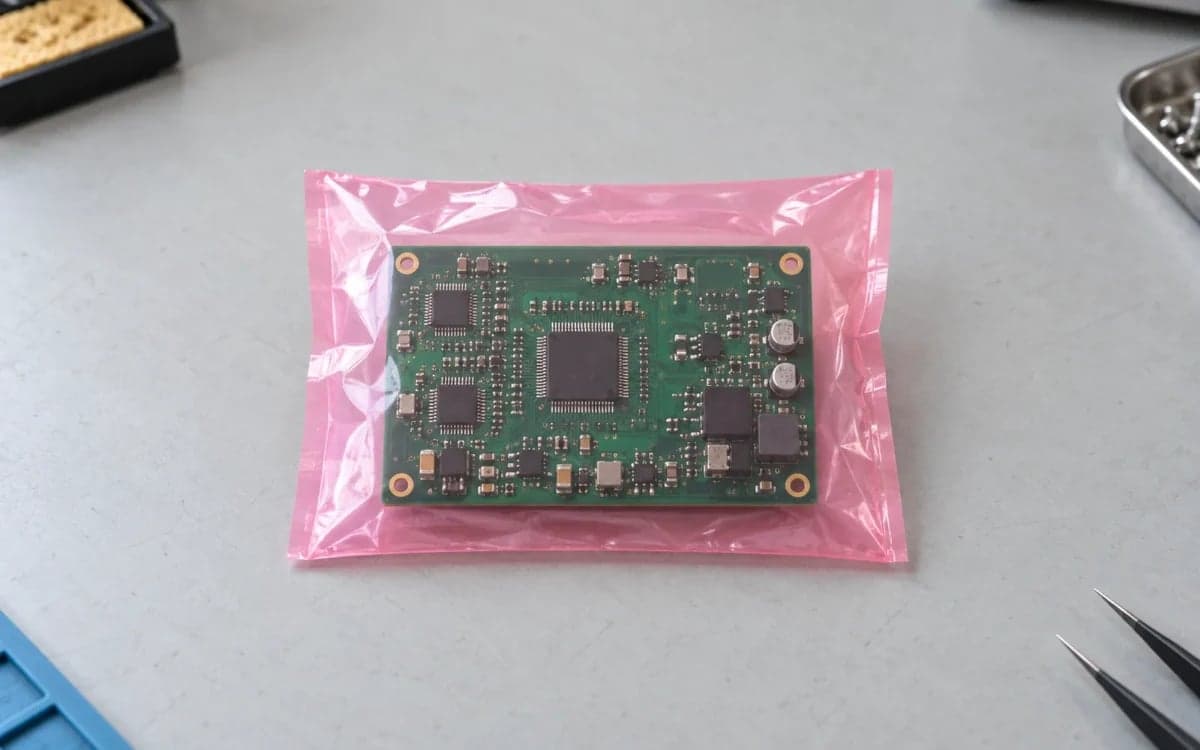
Selecting an ESD bag is not simply a matter of ordering packaging labelled “antistatic.” The correct choice depends on the sensitivity of the electronic component, where it will be handled, how it will travel and what evidence is required for approval. A disciplined specification protects devices from electrostatic discharge while avoiding unnecessary material, cost and handling complexity.
Start with the handling environment
First, map the component’s complete route from production through storage and transport. ANSI/ESD S541-2026 addresses packaging for electrostatic-discharge-sensitive (ESDS) items across all three stages. The most important distinction is whether the packaged item remains inside an electrostatic protected area (EPA) or moves outside one.
Within an EPA, packaging should be low charging and provide conductive or dissipative properties appropriate to the handling process. Outside an EPA, the package also needs discharge shielding. This matters because low charging is not the same property as electrical resistance, and neither term automatically proves shielding performance. Do not assume that every antistatic bag is a shielding bag; define each required function explicitly in the purchase specification.
Match protection to component sensitivity
Use the device manufacturer’s sensitivity classification, handling instructions and approved packaging requirements as the starting point. Highly sensitive semiconductors, populated circuit boards and assemblies with exposed contacts may require a different protective construction from robust parts that remain in controlled handling. Also consider whether the component has sharp leads, heavy edges or an irregular profile that could puncture or abrade the film.
Procurement teams should translate the risk assessment into measurable requirements: low-charging behavior, conductive or dissipative performance, discharge shielding where needed, and sufficient mechanical strength. A bag should not be selected by color or appearance. Similar-looking materials can perform very differently, and visual identification alone cannot establish suitability.
Account for transport and storage conditions
A package that works at an EPA workstation may be inadequate once it enters an uncontrolled warehouse, courier network or customer facility. Review the number of transfers, expected storage period, vibration, compression, humidity exposure and the possibility that the bag will be opened for inspection. If the product leaves the EPA, discharge shielding becomes part of the packaging requirement rather than an optional upgrade.
Secondary packaging also matters. Trays, cartons, cushioning and labels should support the ESD control concept instead of introducing avoidable charging or damaging the primary bag. Define how operators will pack, seal, identify and unpack the item so that protection is maintained throughout the real process, not only during a laboratory test.
Specify dimensions and closure correctly
Bag dimensions should allow the component to enter without force, fit without excessive movement and close without stressing the seal. Specify usable internal dimensions rather than relying only on nominal external width and length. Include allowances for seals, flaps, closures, bulky connectors and any protective insert. Oversized bags can increase material use and movement; undersized bags can strain seams or leave the closure incomplete.
Choose the closure according to the handling cycle. Heat sealing can provide a controlled, tamper-evident closure for shipment, while a zip closure may be more practical for repeated access. A fold-over flap or label closure may suit some internal transfers, provided it meets the defined protection and process controls. State whether the bag is single-use or expected to be reopened, and verify that the closure remains effective after the intended number of cycles.
Qualify the bag and the supplier
Qualification should connect the specification to objective evidence. Request relevant technical data and test results for the properties you have specified, together with material identification, lot traceability and change-control expectations where these are important. Confirm that samples represent the proposed production material, then test them under conditions that reflect actual packing, storage and distribution.
Incoming inspection can include dimensions, seal quality, appearance, labelling and documentation checks, with periodic verification of critical ESD properties based on risk. Set acceptance criteria before placing repeat orders. If custom printing, labels or closures are added, qualify the finished bag because converting steps can affect practical performance.
Build a clear purchasing specification
A useful request for quotation identifies the component and sensitivity, EPA status at each stage, required ESD functions, transport conditions, bag construction, usable dimensions, closure type, quantity, printing and documentation. It should also state sample-approval and ongoing quality requirements. This gives suppliers a consistent basis for quotation and reduces the risk of substituting a generic “antistatic” material for a functionally appropriate package.
Poşetsan Date manufactures ESD bags using Branopac raw materials and offers custom sizes. Buyers can review available ESD bag options and discuss application-specific requirements through its ESD and antistatic packaging capabilities. The final selection should always be validated against the component, handling route and agreed qualification criteria.
Procurement checklist
Document component sensitivity and manufacturer requirements.
Identify every point inside and outside the EPA.
Specify low-charging, resistance-related and shielding functions separately.
Assess transport, storage and mechanical hazards.
Define usable dimensions and the required closure method.
Approve representative samples and supporting test evidence.
Set incoming inspection, traceability and change-control expectations.